Build
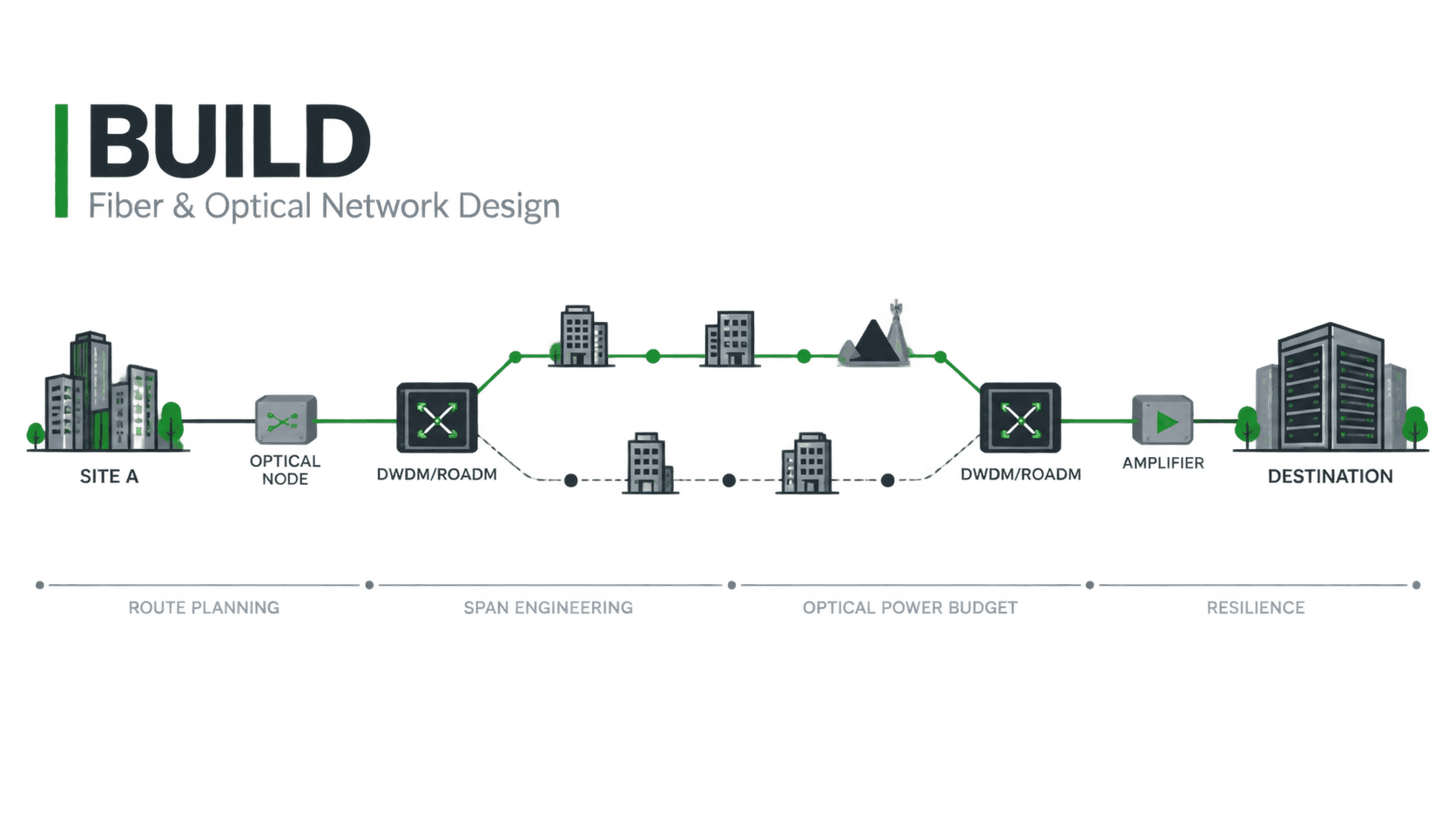
Fiber & Optical Network Design
- Long-haul, metro, backbone and ISP networks
- DWDM, ROADM and OTN engineering
- Route, span and optical power-budget design

Optical Network Engineering
From new fiber routes and capacity expansion to network audits, consolidation and modernization.
What we do
Build
Expand
Audit
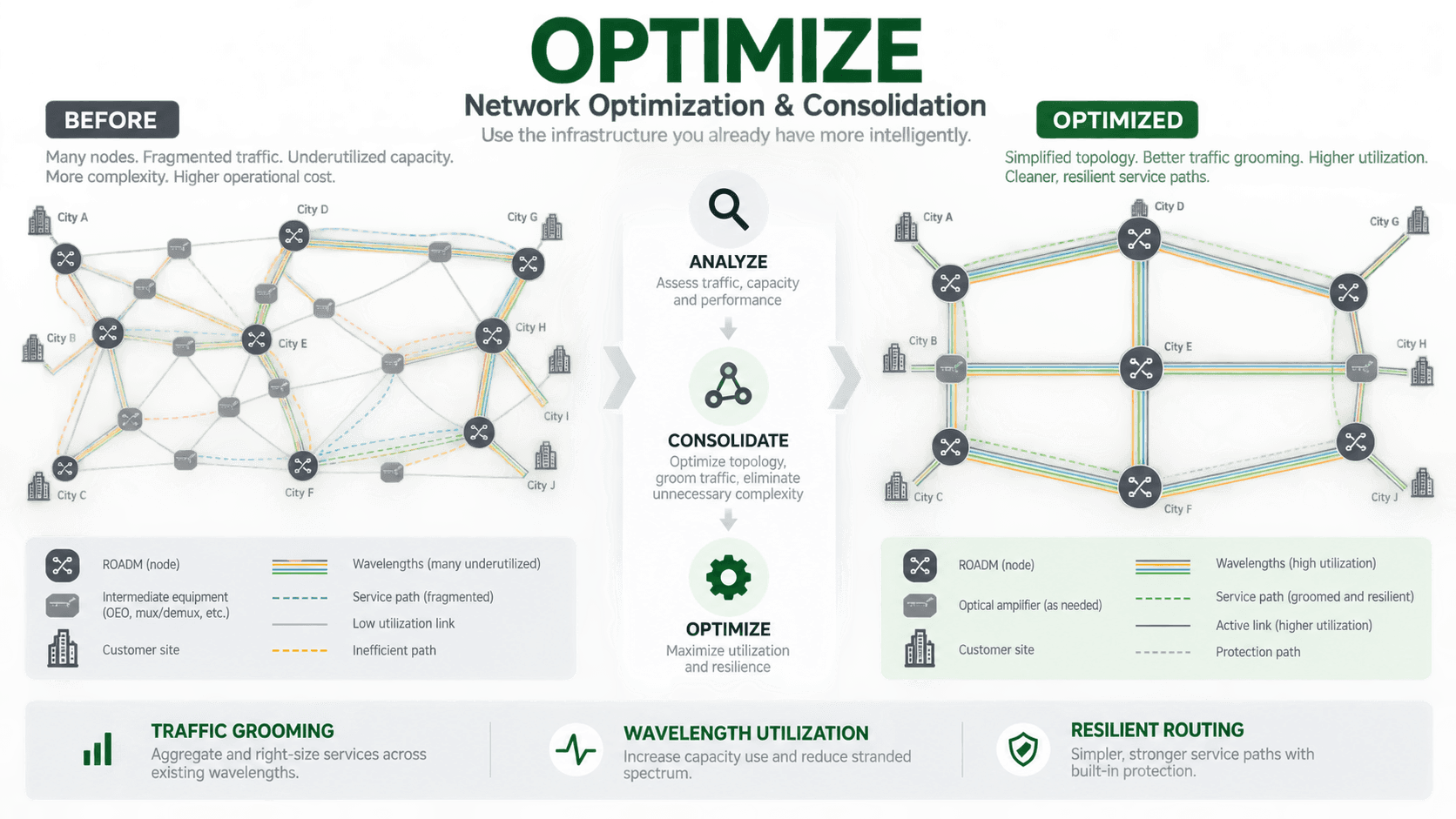
Optimize
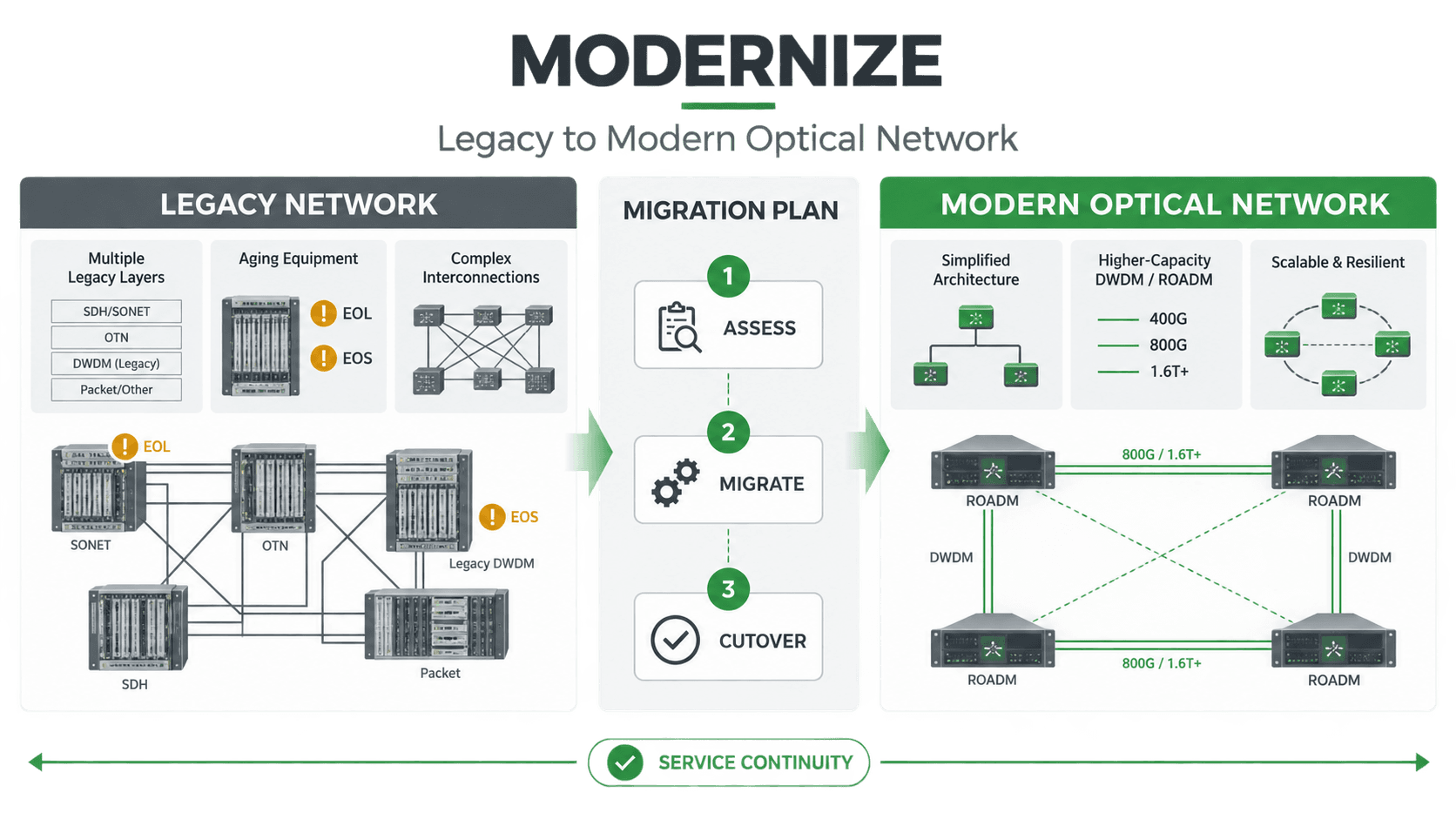
Modernize
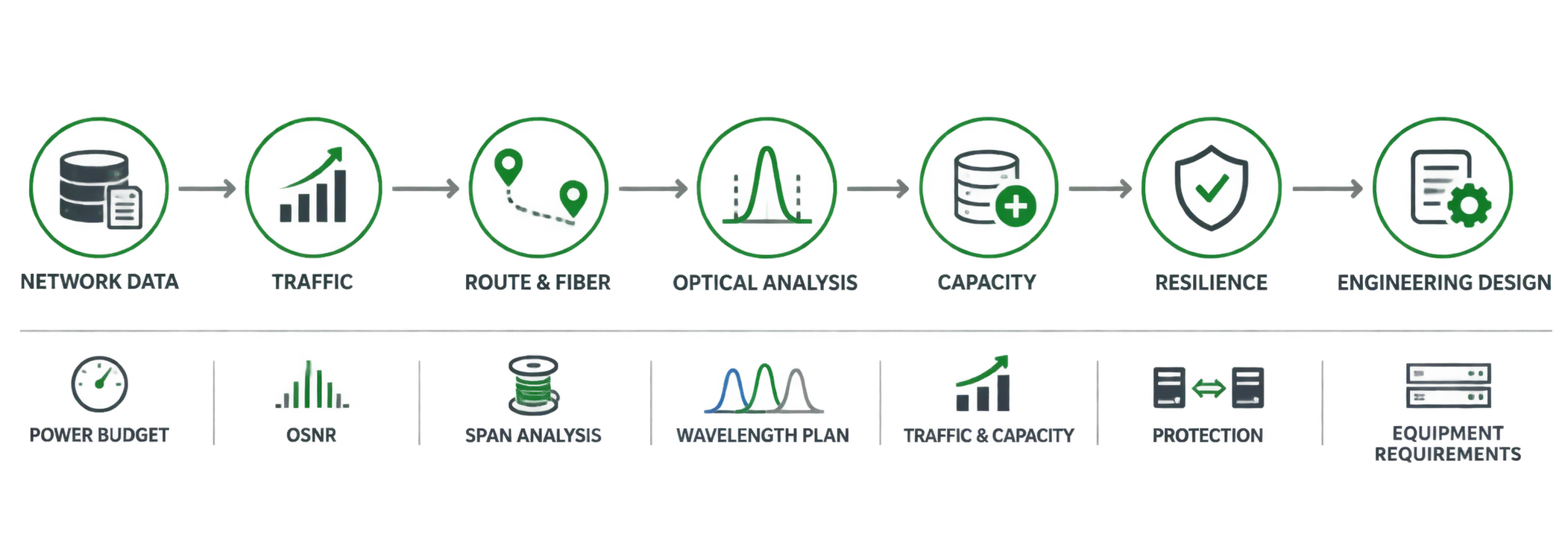
Engineering workflow
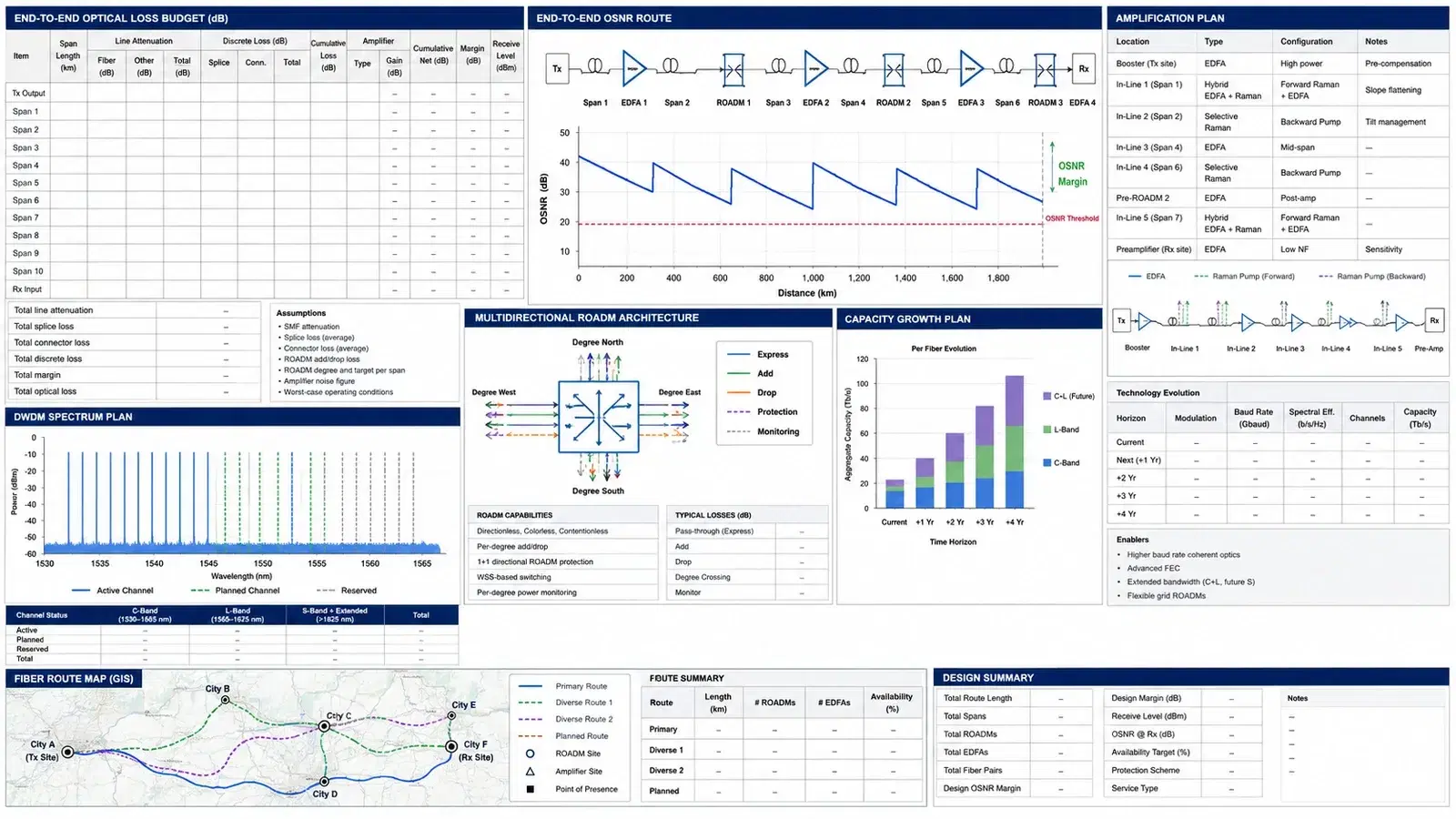
What you get
Who we support

Why NodalWire
Design beyond minimum day-one requirements.
Engineering decisions driven by the network, not a product catalog.
Build new networks or improve what is already deployed.
Design information that remains useful after implementation.
Optical engineering insights
Loss margin alone does not tell the whole story.
More gain does not automatically mean a better optical system.
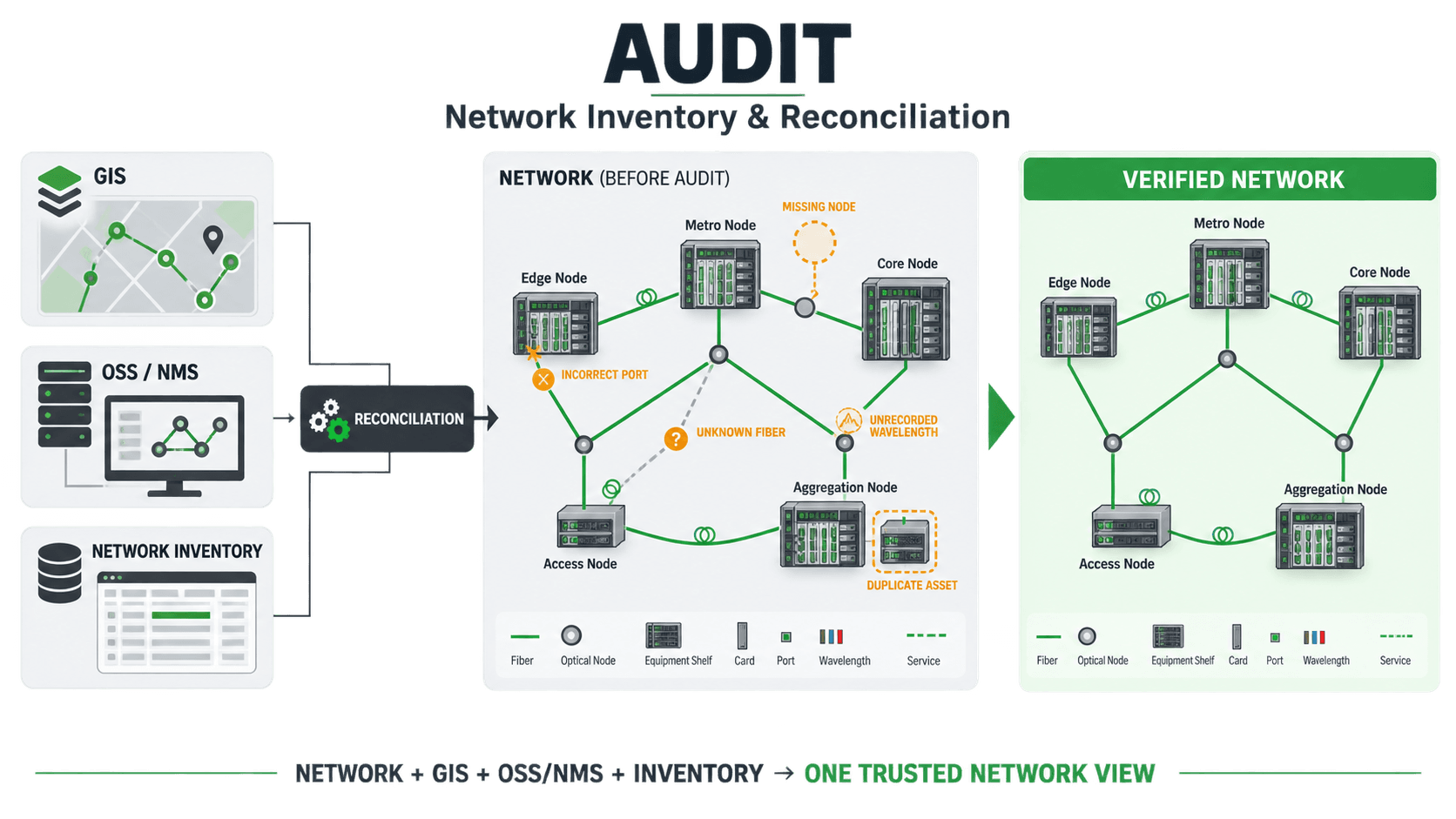
You cannot optimize a network you do not accurately understand.
Capacity and launch-power decisions can introduce constraints before equipment limits are reached.
Add, drop, express and protection decisions determine how cleanly the network can grow.
Repairs, splices and changing route conditions gradually consume engineering headroom.
Reach and modulation choices must account for accumulated signal behavior across the route.
Records that no longer match the field make every optimization decision less reliable.
Dark optical fiber or metro backbone infrastructure
Placeholder: optical-network-closing-cta.webp
Common questions
Yes. We can review architecture, inventory, routes, optical margins, wavelength use, capacity constraints and documentation to identify practical next steps.
Yes. NodalWire supports route, span, DWDM, ROADM, OTN, power-budget, capacity, resilience and implementation-ready design for new networks.
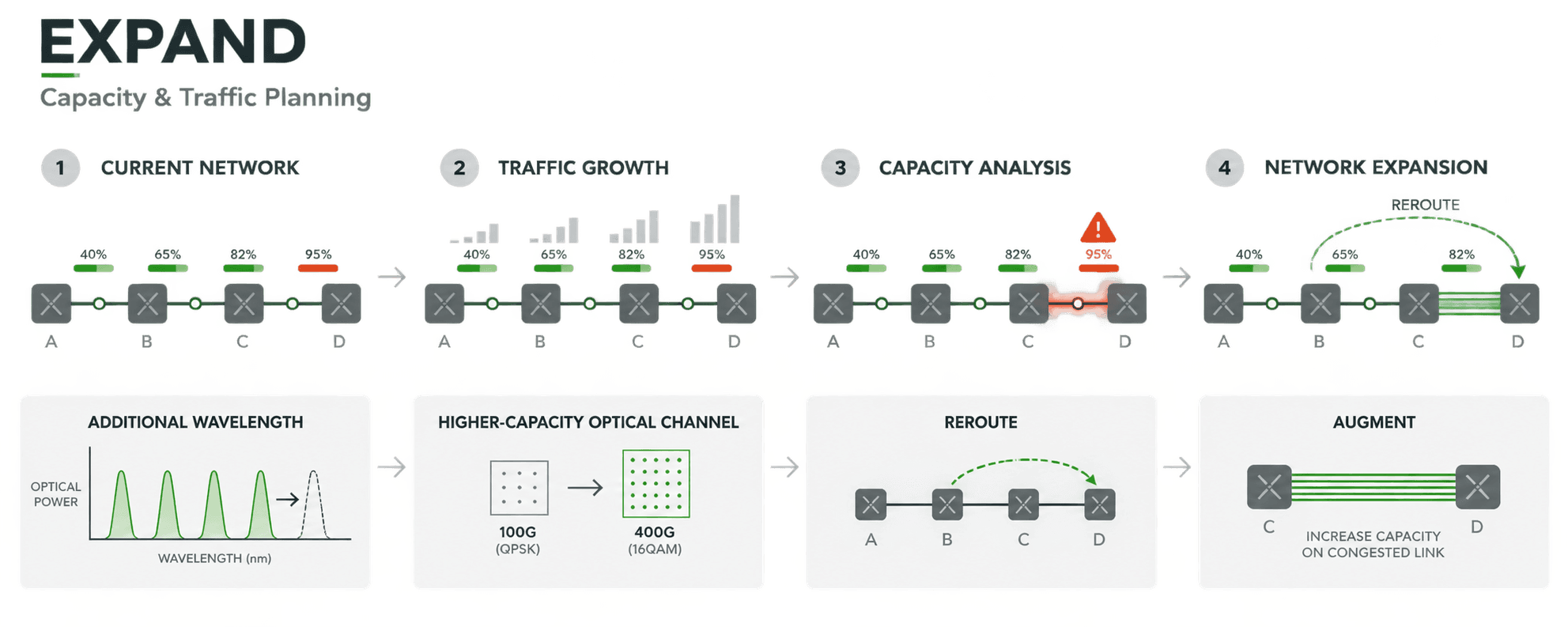
Yes. Power budgets, OSNR and link engineering, traffic dimensioning, wavelength planning and growth analysis can be included according to project scope.
Yes. We can reconcile available network records, GIS, OSS/NMS data and field information across fiber, nodes, equipment, ports, wavelengths and services.
Yes. Engineering recommendations follow the network requirements, operating constraints and lifecycle goals rather than a product catalog.