Loading
Microwave Network Planning & Design
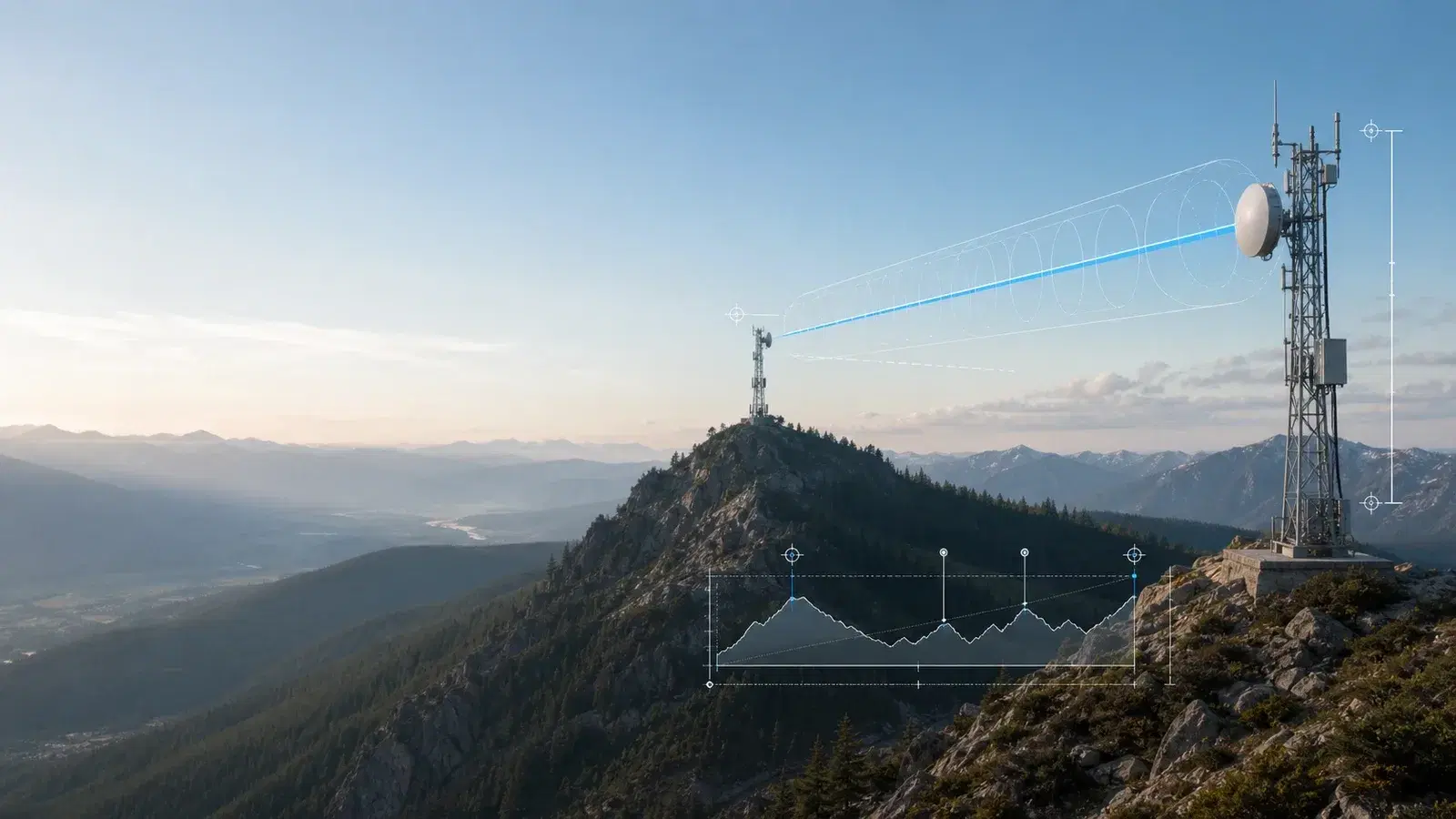
Carrier-grade point-to-point and microwave network engineering for telecom operators, utilities, transportation networks and critical infrastructure, from feasibility and path engineering through spectrum planning and implementation-ready design.
Microwave engineering is rarely about whether two radios can communicate. The real decisions are capacity, availability, spectrum, terrain, resilience, scalability and how the wireless layer fits into the wider transport network.
The path exists. But will it close at the required availability?
Traffic is growing. Can the existing spectrum and radio configuration support it?
A new site is required. Where should the next microwave hop be located?
Fiber already exists. Would microwave create meaningful route diversity?
The network works today. What happens when traffic doubles?
Hundreds of existing links are operational. Which should be retained, upgraded, rerouted or retired?
What we engineer
NodalWire evaluates the complete path, geography, RF conditions, spectrum, capacity, availability, topology and operational requirements, before turning it into an implementation-ready design.
01
Network Requirements
02
GIS & Terrain Analysis
03
Candidate Site Selection
04
LOS & Fresnel Analysis
05
Path Profile Engineering
06
Frequency & Channel Planning
07
Link Budget
08
Rain Fade & Availability Modeling
09
Capacity & Modulation Planning
10
Resilience & Protection
11
Equipment Selection
12
Implementation-Ready Design
01
Network Requirements
02
GIS & Terrain Analysis
03
Candidate Site Selection
04
LOS & Fresnel Analysis
05
Path Profile Engineering
06
Frequency & Channel Planning
07
Link Budget
08
Rain Fade & Availability Modeling
09
Capacity & Modulation Planning
10
Resilience & Protection
11
Equipment Selection
12
Implementation-Ready Design
Engineering output
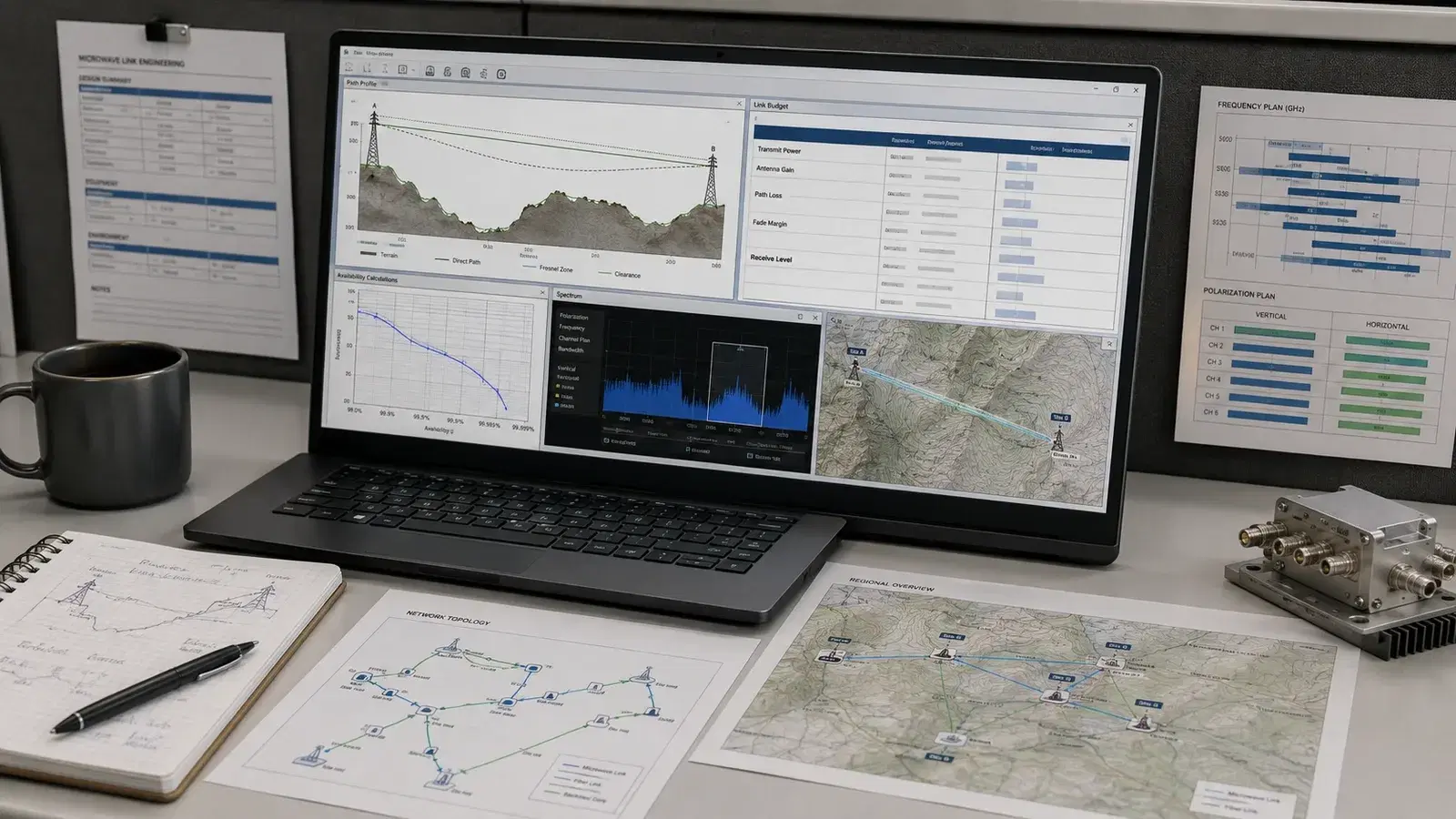
The point of an engagement is not a claim of experience. It is a set of documents your own engineers can check line by line, against the terrain, the spectrum position and the traffic forecast, before any equipment is ordered or any tower is touched.
Deliverables
How we work
Every microwave design starts with geography and ends with an operational network. We combine GIS, RF engineering, spectrum planning and transport architecture rather than treating the radio link in isolation.
Scroll to see the full diagram
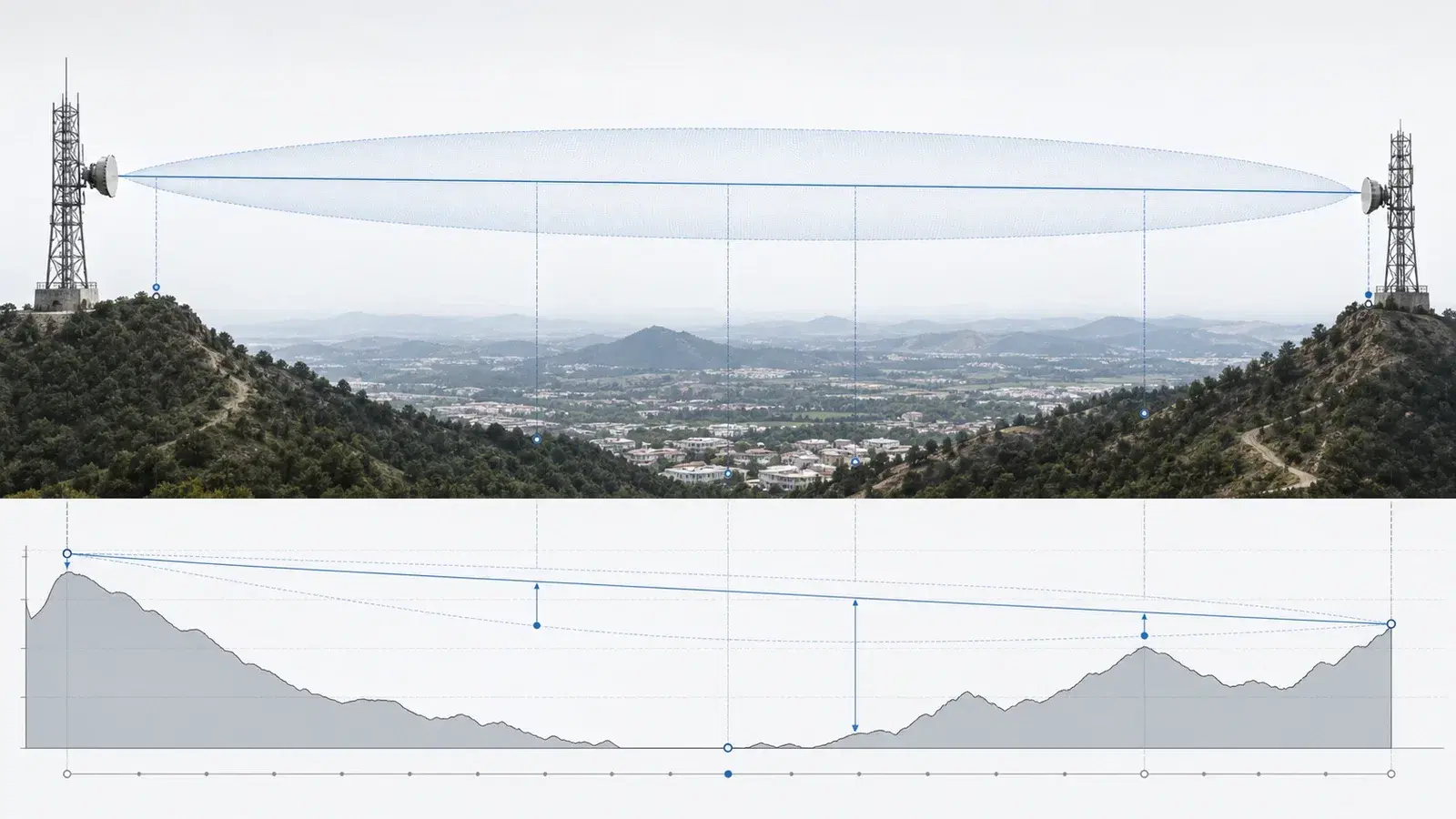
Scroll to see the full diagram
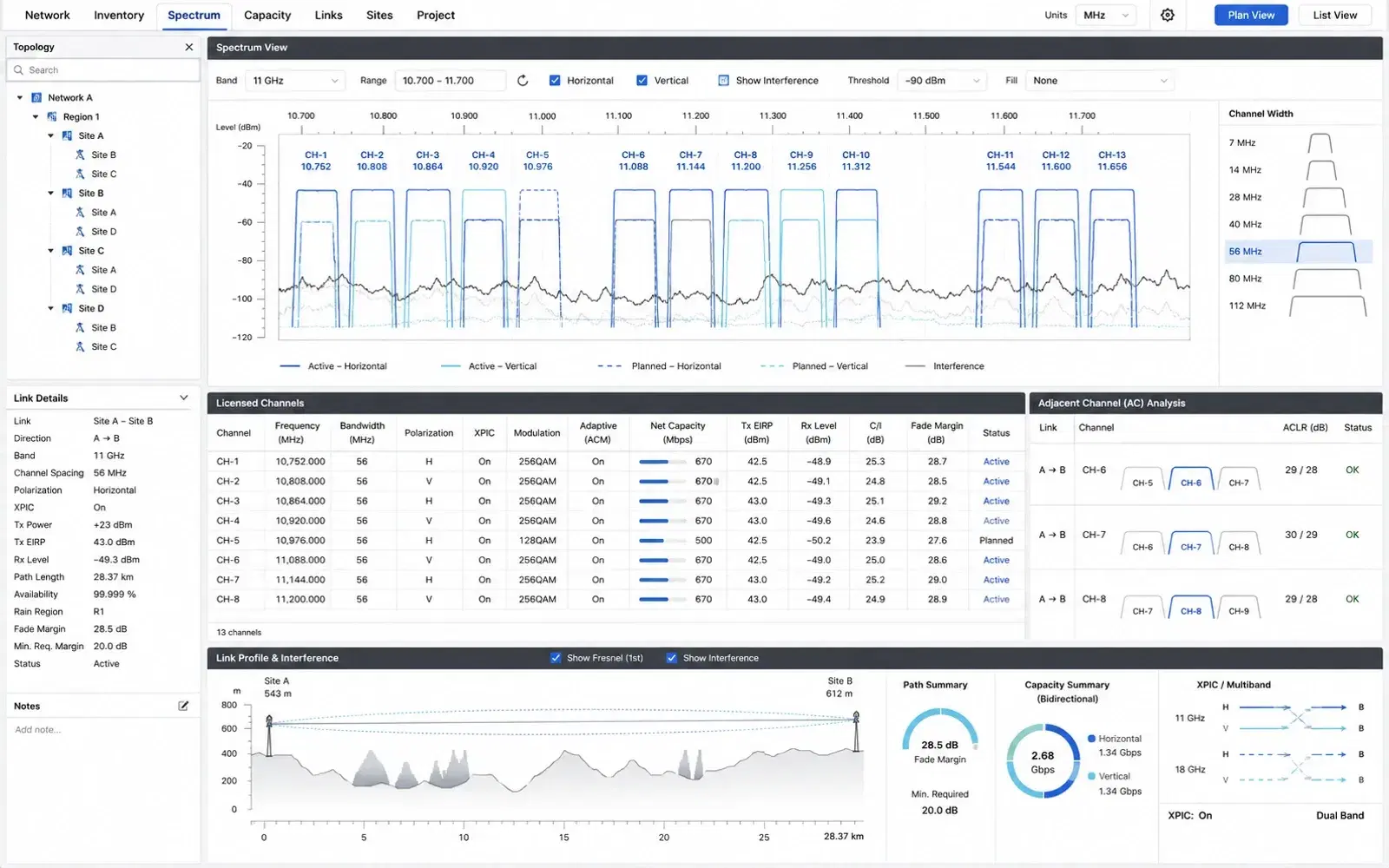
Scroll to see the full diagram
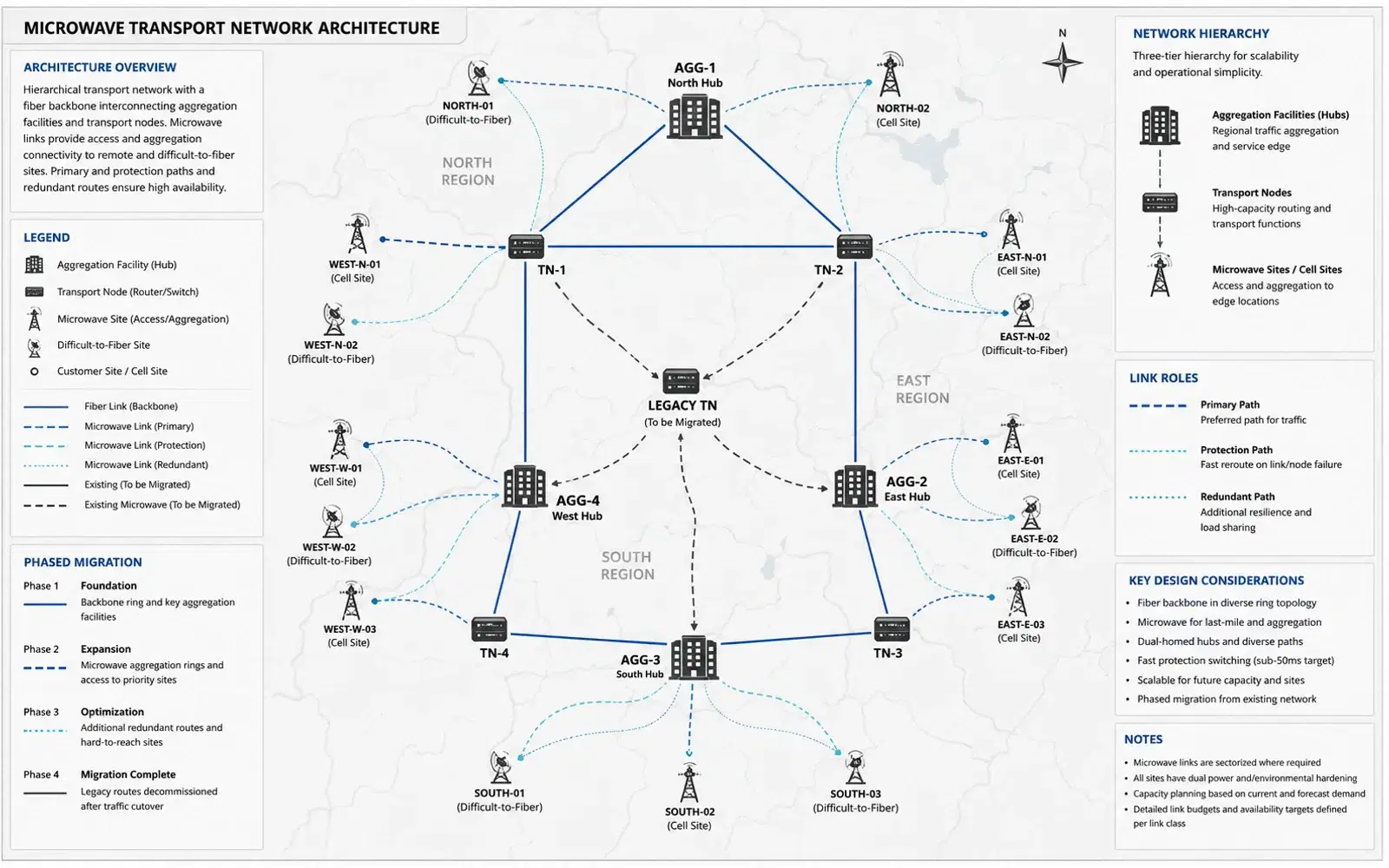
Scroll to see the full diagram
Geographic planning
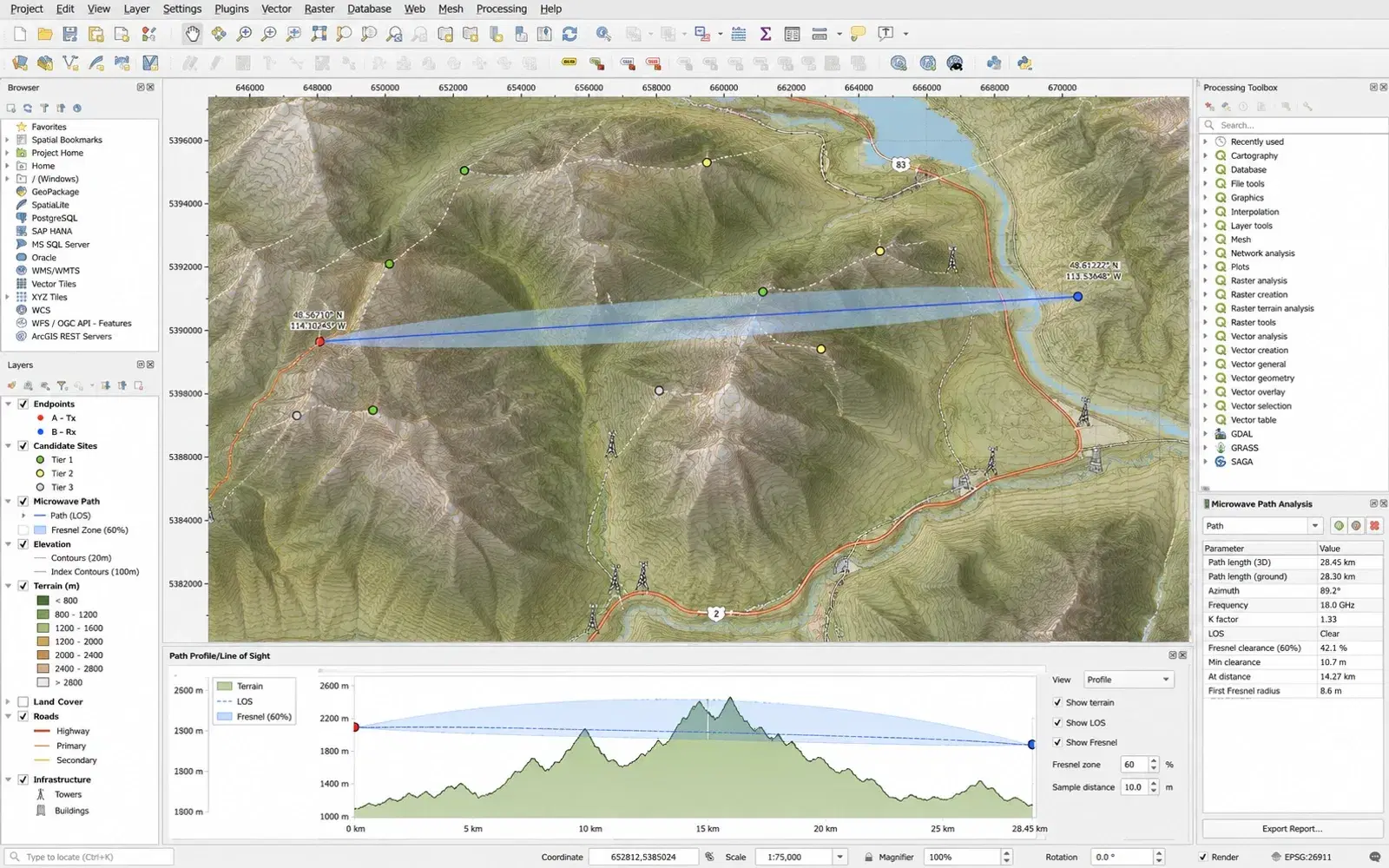
Before evaluating a microwave path, understand the location.
Use NodalWire’s GIS planning tool to explore coordinates, terrain, site context and other geographic information that can support early-stage network planning.
Explore the GIS Planning Tool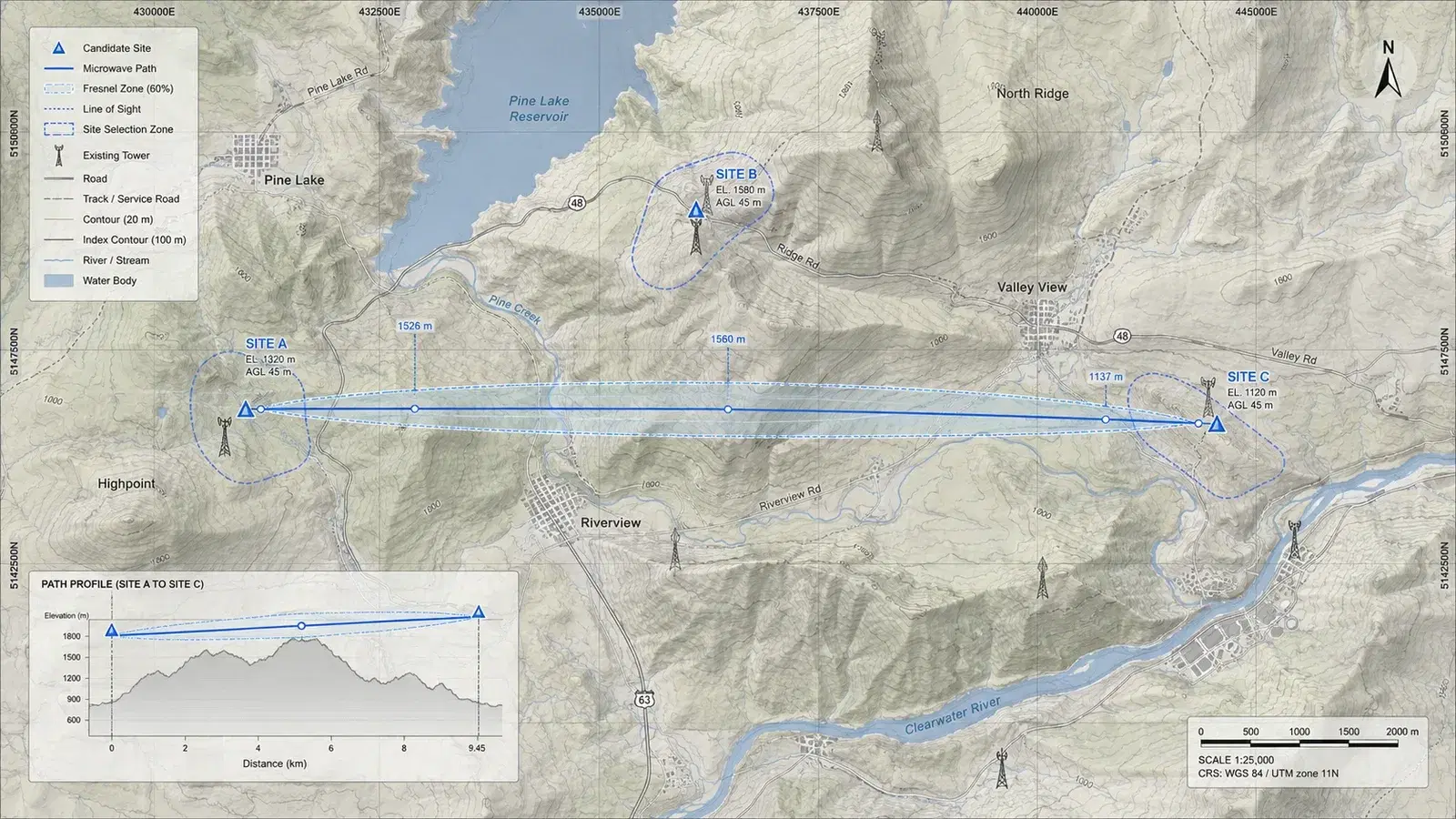
Scroll to see the full diagram
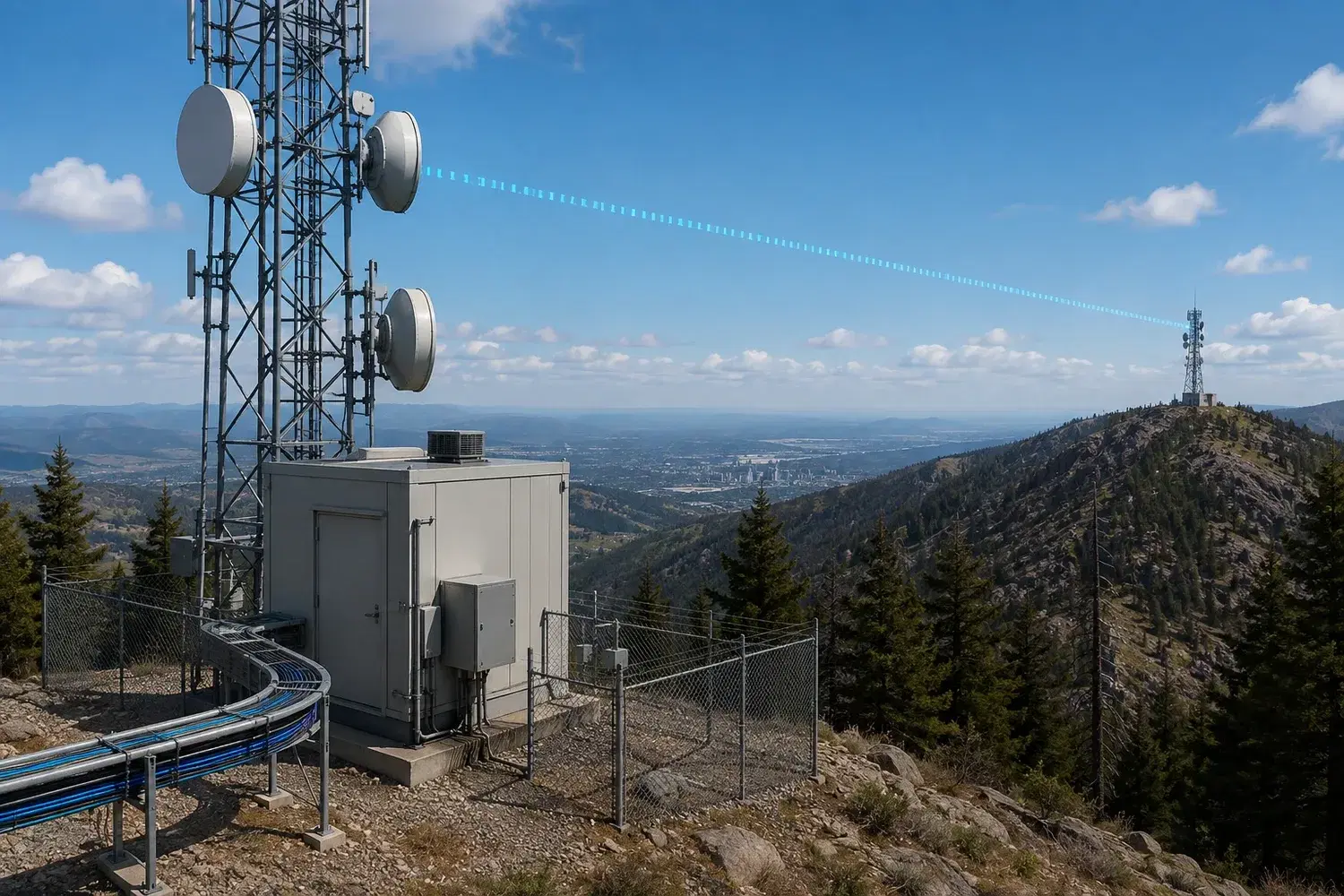
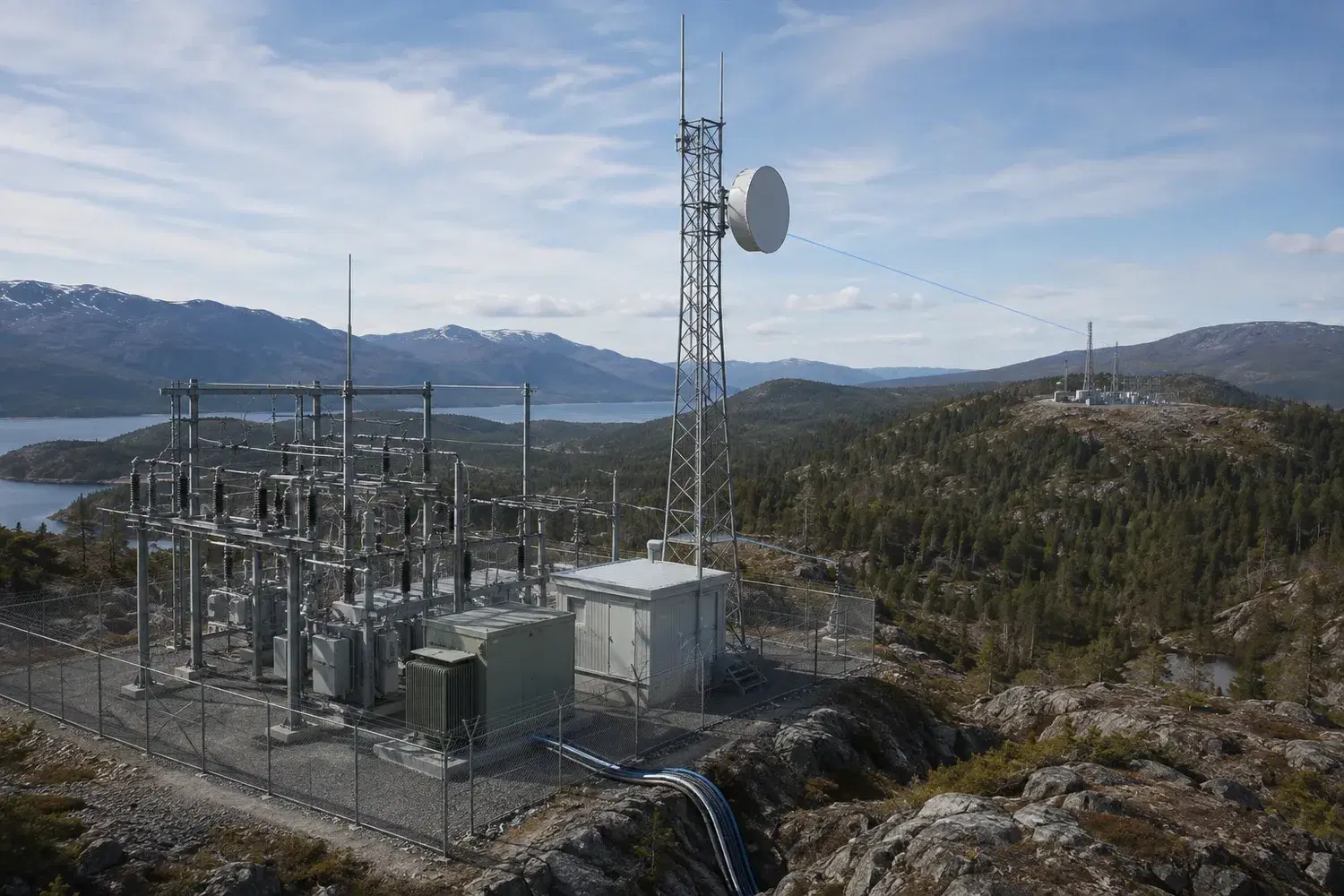
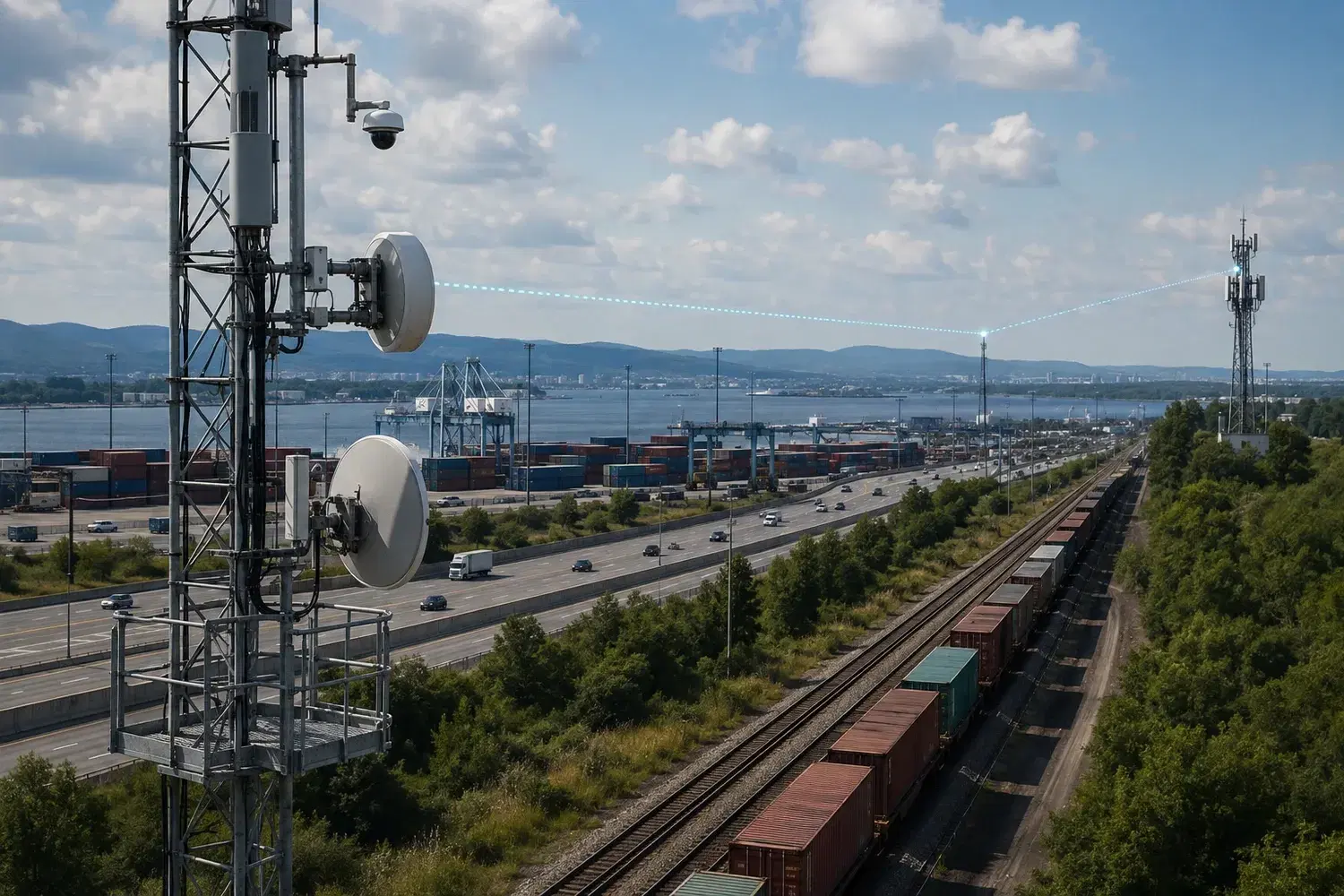
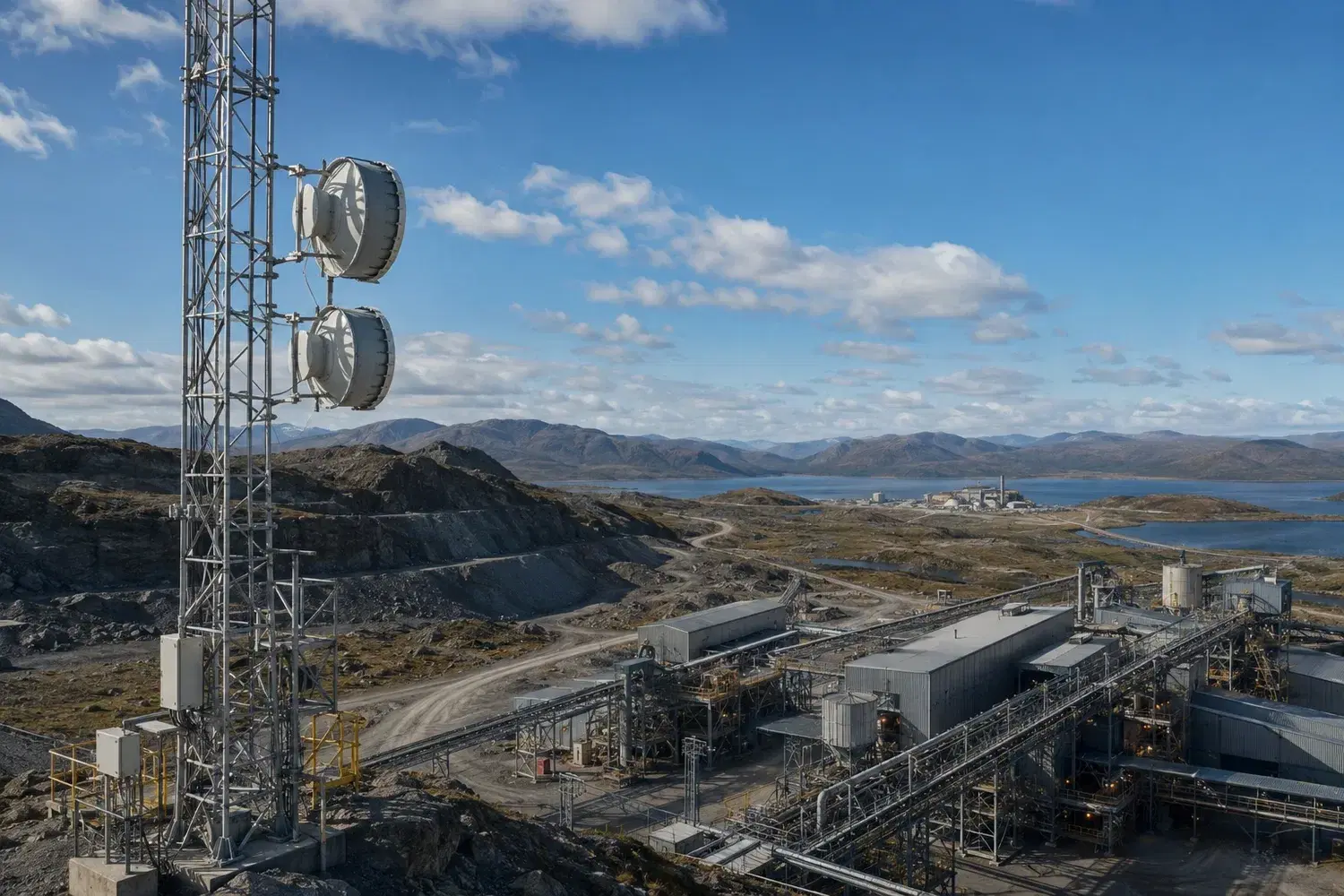
Network Optimization Case Study
Major Mobile Operator, India

Existing Network
Engineering Assessment
Optimized Transport
A large operational microwave backhaul network had evolved over time as the mobile network expanded. As fiber became increasingly available, the transport architecture required reassessment.
The objective was not simply to remove microwave. The engineering question was where microwave should remain, where traffic should migrate to fiber, and how the overall transport network could be simplified without compromising resilience.
The review looked at the network as a system, not link by link:
The work developed a target architecture where:
The objective is not to maximize microwave or fiber. It is to engineer the right transport architecture.
01
A properly engineered licensed microwave link can serve as primary transport where its capacity, availability and operational requirements are satisfied.
02
Channel width, modulation, polarization, and, where applicable, XPIC, MIMO and multiband strategies can all influence how existing spectrum is used.
03
A wireless path can provide physical route diversity from underground fiber infrastructure and can become part of a broader resilience strategy.
Whether you are evaluating one critical path or rationalizing a larger microwave network, NodalWire can help assess the engineering before you commit to the architecture.
New paths · Existing network reviews · Capacity upgrades · Fiber and microwave optimization · Resilience planning
Common questions
The questions we hear most often before an engagement begins.
Yes. Reviewing a network that is already operational, to assess fade-margin risk, interference exposure, capacity headroom, resilience and where the architecture can be simplified, is a large part of our work. It applies whether NodalWire designed the network or another party did.
Yes. Site evaluation covers coordinates and elevation, line-of-sight and Fresnel clearance to the intended endpoints, structure and antenna-height requirements, and the interference environment, so the feasibility question is answered before a lease or a design is committed.
Yes. Many transport networks are a mix of the two. We design the microwave layer to integrate with the existing fiber and IP/MPLS architecture, and plan primary and protection paths across both.
Yes. As fiber coverage grows, the question of where microwave should remain, where traffic should move to fiber, and how to reduce unnecessary dependencies is an engineering assessment. We produce a target architecture and a migration path rather than a blanket recommendation.
Yes. Path profiles, link budgets, availability modeling and frequency plans are standard outputs, delivered in a form your engineers can review against the terrain and the traffic forecast.
Yes. The engineering is vendor-neutral. A design can be produced around a platform you have already selected, or with an equipment recommendation based on what the paths require, whichever fits your procurement process.
Yes. Frequency and channel planning, interference analysis and the technical inputs required for coordination and licensing applications are part of the design process. Licensing rules vary by country and band, so the work is scoped to the jurisdiction involved.
Yes. We stay involved through implementation with technical guidance and coordination with the installation partner, so the design intent reaches the finished network. We focus on engineering rather than the physical build itself.