One Architectural View
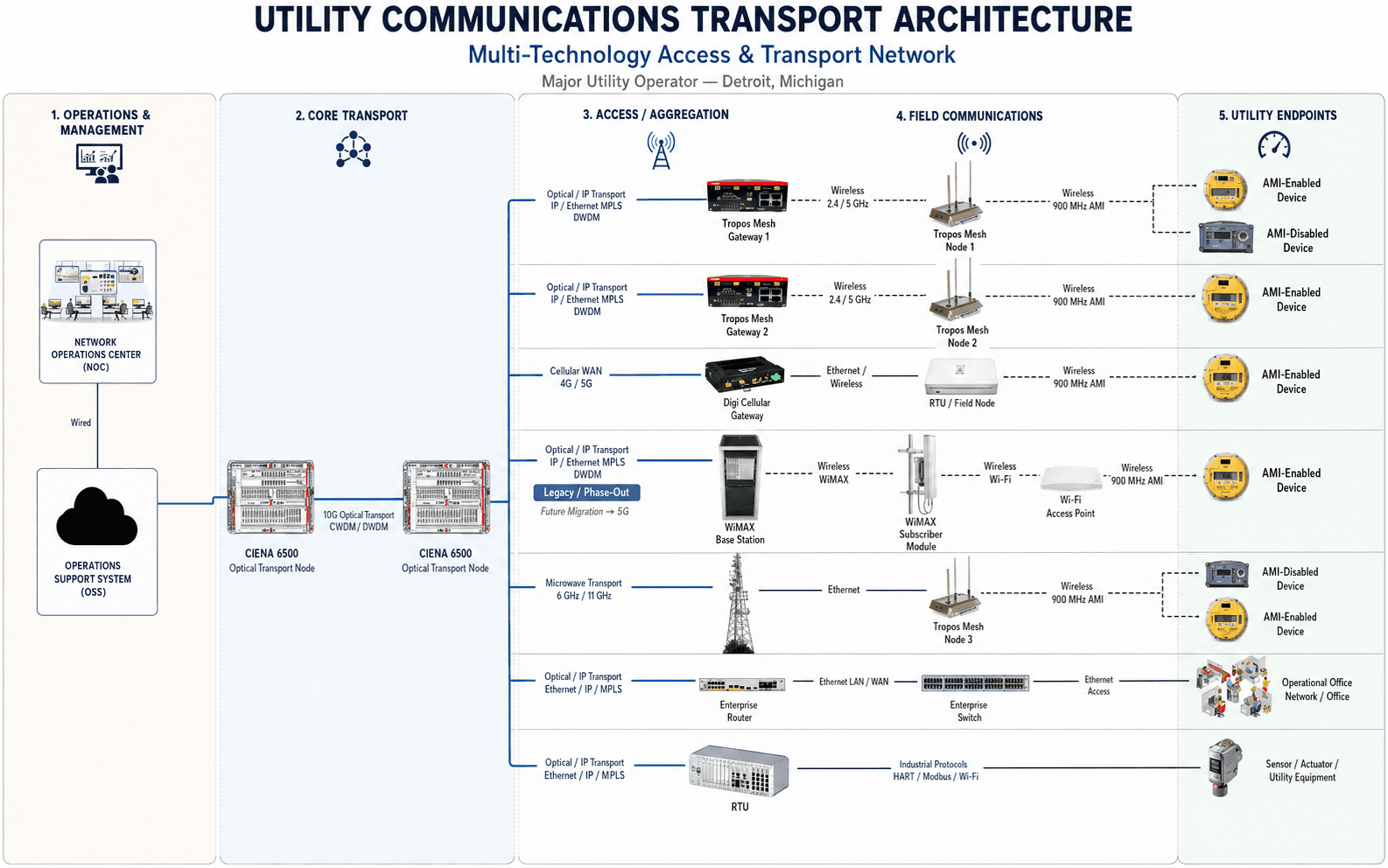
Previously fragmented networks and technologies were consolidated into a common current-state and future-state engineering view.
Case Study
How a major Detroit utility simplified a fragmented communications environment supporting 1,000+ operational and IoT devices across optical, microwave, wireless mesh, cellular, AMI and enterprise networks.

Major Utility Operator · Detroit, Michigan · August 2025 · 1,000+ Devices · Designed for Implementation
01 Challenge
Over time, individual utility applications had been connected using different communication technologies and independent transport paths. Optical, wireless mesh, AMI, WiMAX, cellular, microwave and enterprise networks existed as separate technology islands rather than one coordinated architecture.
A major additional challenge was simply understanding what already existed. There was no single consolidated engineering view of the complete network.
02 Solution
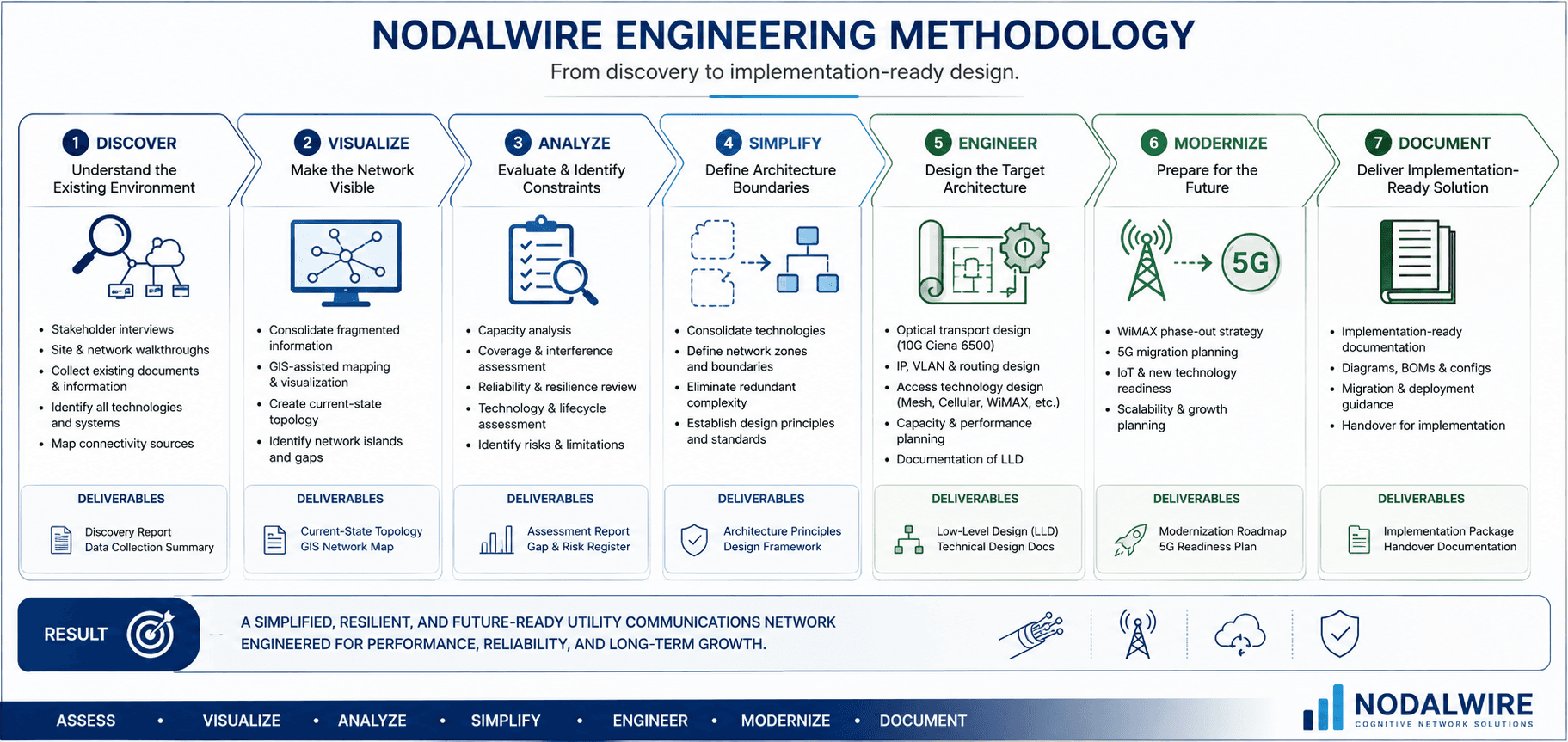
The engagement started with a complete assessment of the brownfield environment. Existing technologies, transport paths, field devices and connectivity relationships were consolidated into a single current-state architecture using GIS-assisted network visualization.
From that baseline, the network was redesigned around one principle:
Use the most appropriate access technology at the edge while converging services onto a standardized IP and optical transport architecture.
03 Benefit
The redesign transformed a fragmented multi-technology environment into a documented, coordinated transport architecture designed to support existing operational systems and future utility applications.
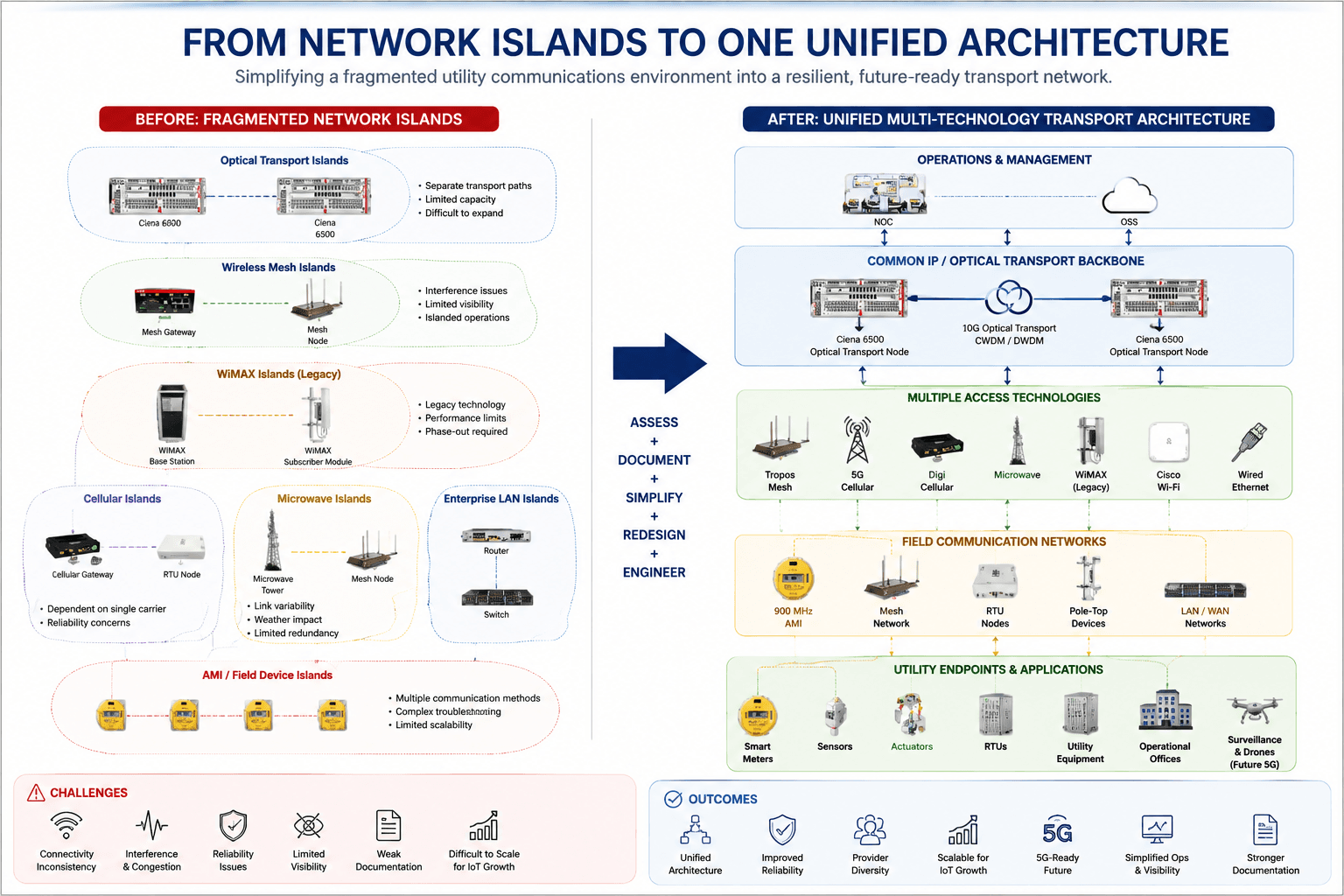
Previously fragmented networks and technologies were consolidated into a common current-state and future-state engineering view.
A standardized transport architecture reduced the complexity of operating and troubleshooting isolated network technologies.
Provider diversity, cellular backup and a recommended satellite resilience option reduced dependence on any single connectivity path.
The architecture was designed to accommodate continued growth in smart meters, sensors, RTUs, actuators and other connected utility devices.
A defined modernization direction prepared the network for the retirement of WiMAX and future 5G applications, including connected drone surveillance.
The engagement concluded with a detailed Low-Level Design and consolidated network documentation suitable for implementation planning.
If your network has grown one project, technology or site at a time, NodalWire can help establish the current-state picture, identify unnecessary complexity and develop an implementation-ready architecture for what comes next.