
Loading
How a large operational microwave network was prioritized for resilience improvement within a six-month window.
01 Challenge
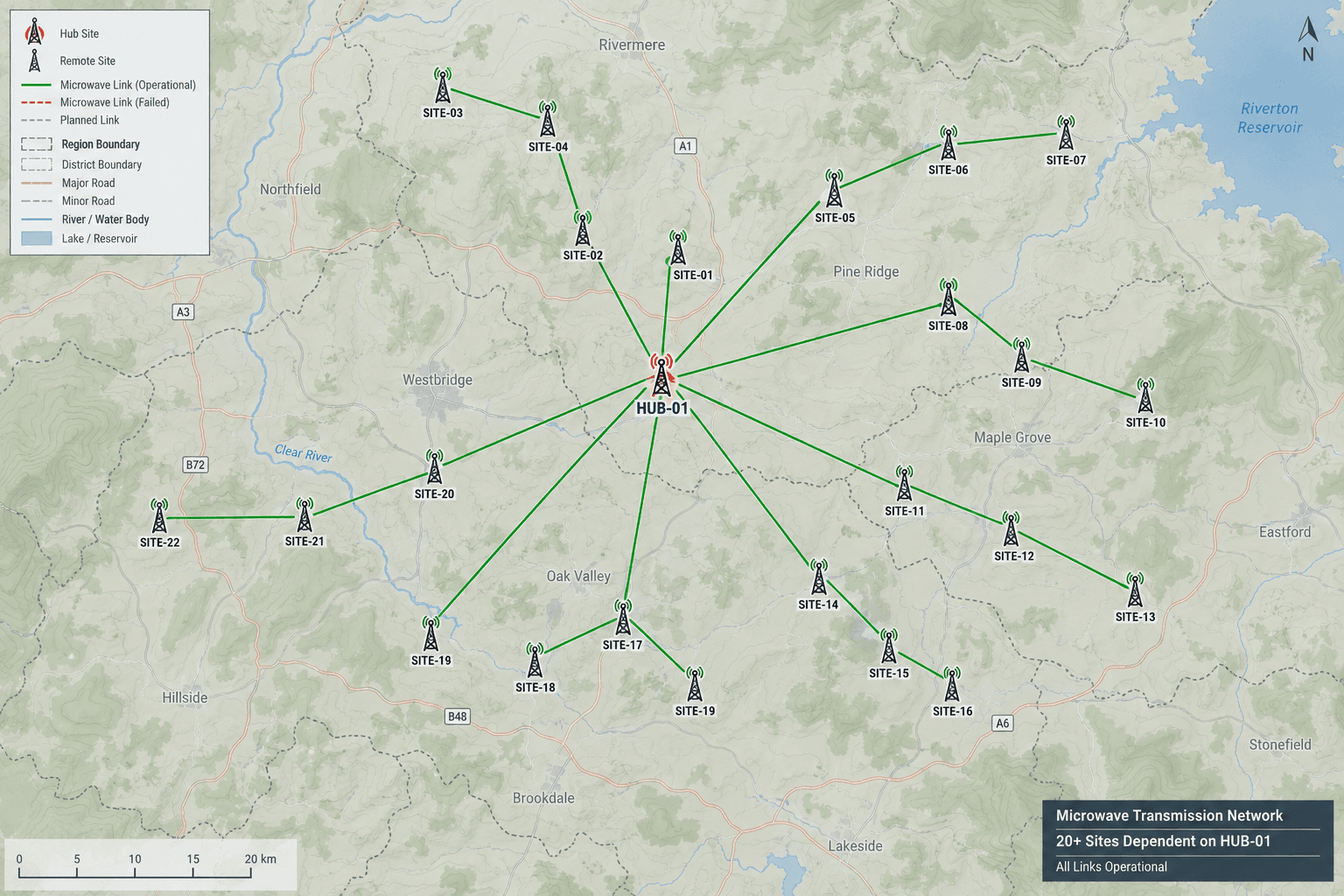
The network had grown with microwave hubs and daisy-chain connections, creating different levels of dependency across the network.
Some hub sites supported many downstream sites. If one of these critical hubs went down, the outage could extend well beyond a single location.
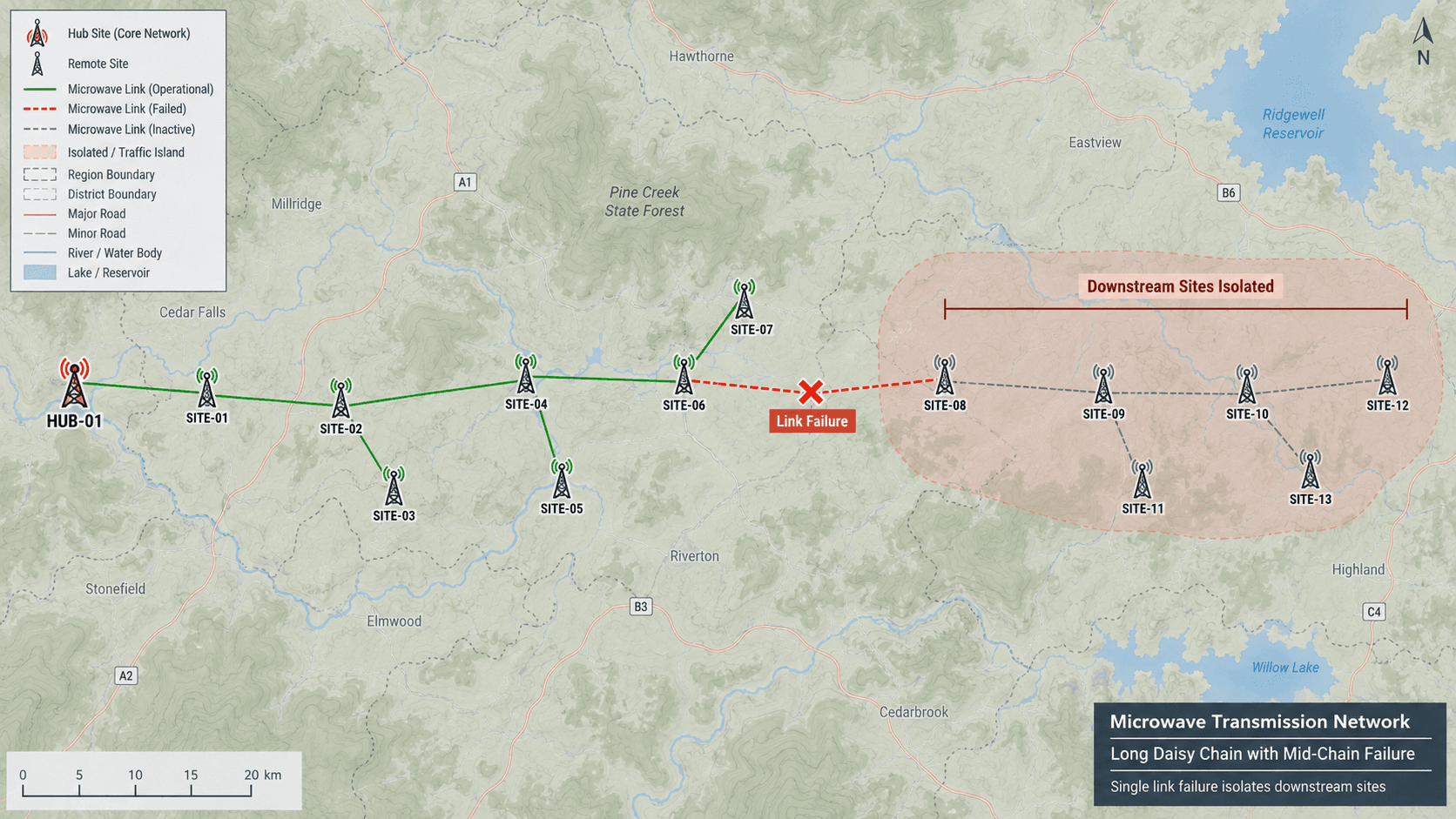
At the same time, some daisy chains were more vulnerable than others due to power outages, longer paths, weather exposure and known field issues.
With only two transmission planners and a six-month timeline, reviewing and redesigning every site was not practical.
The challenge was clear: Find where a failure could create the greatest service impact and prioritize those areas first.
02 Solution
Connectivity data was extracted from the TEMS planning environment and analyzed in Excel.
Instead of looking at hundreds of sites individually, the network was analyzed by dependency.
Hub sites were ranked according to the number of downstream sites relying on them. Sites with more than five dependencies became the initial focus, with the highest-dependency hubs receiving greater priority.
But dependency alone was not enough.
Field teams provided the operational history needed to identify vulnerable daisy chains, recurring power issues and problem locations. Stable chains could remain lower priority while known trouble areas moved higher.
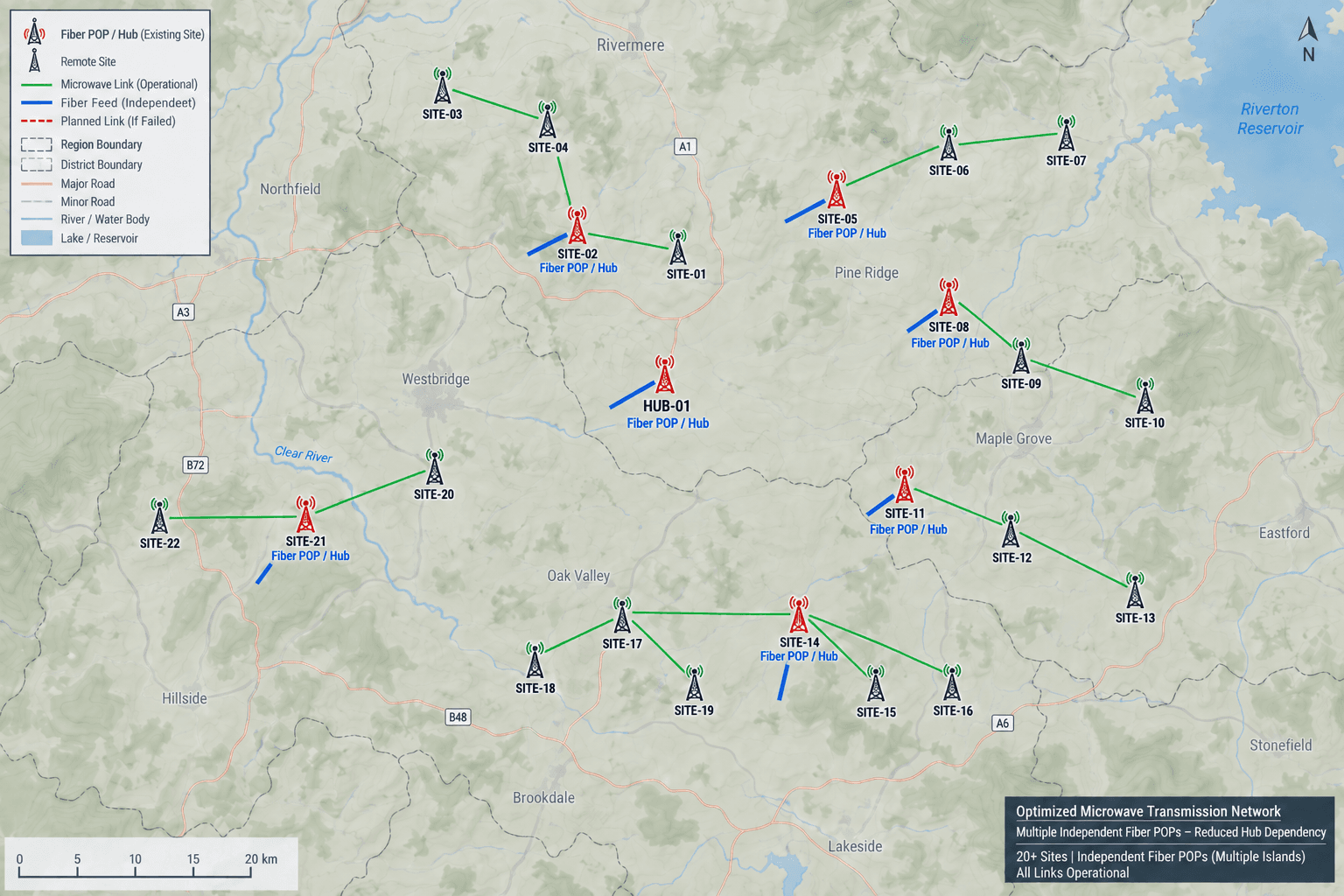
The customer also had a strong existing fiber network. Where appropriate, that infrastructure created opportunities to reduce microwave dependency and improve route resilience.
The solution combined network dependency, field history and existing fiber to determine where redesign would have the greatest impact.
03 Benefit
The network did not need to be treated as hundreds of equally important links.
The analysis created a clear engineering priority: protect the locations where one failure could create the greatest downstream impact.
This allowed the planning team to focus the six-month effort on:
Most importantly, the network could be improved through targeted changes rather than unnecessary redesign of the entire transport network.
Better resilience starts with better prioritization.